Quantcast
Channel: models – SoraNews24 -Japan News-

Japanese stores create clever anti-scalper policies for Pokémon cards, Gundam model kits

$
0
0

Making sure they end up in the hands of Pokémon Trainers and mobile suit fans, not resellers.

You’d assume that the people buying anime and video game-related merchandise are, well, anime and video game fans. What does the average person want with, say, the newest Pokémon cards or latest Gundam plastic model kit? Unfortunately, though, a number of people buying those kinds of items have no burning desire to catch ‘em all or save humanity from the tyranny of Neo Zeon. Instead, the only thing that sets their heart aflame is cold heard cash, as they’re snatching up supplies of the fan-oriented items to resell online at a tidy profit stemming from the scarcity resellers themselves help create.

The problem has only gotten worse during the pandemic as demand for stay-home entertainment has risen, but good countermeasures aren’t easy to implement. Severely limiting purchase quantities can hurt people who are buying multiples for personal use, such as a parent buying more than one because they have more than one kid, and they’re of limited effectiveness since resllers can just make the rounds to multiple shops, maxing out at each. Some sort of online pre-registration could alleviate that, unless resellers make multiple accounts, which they certainly will, at which point it’s just another hassle for genuine fans.

So the best solution is some sort of plan that hurts resellers but has no ill effects for personal-use customers. Does such a perfect solution exist? It might, with a very smart idea from Mickey, a toy shop in Nagoya.

Taped to Mickey’s new arrivals shelf, where you’ll currently find Gunpla plastic models for the RX-178 Gundam Mk. II MVF-X08 Eclipse Gundam, is a notice that reads:

“To purchasers of plastic models:

As a countermeasure against resellers, for certain Gundam models and other low-inventory items, at the time of purchase the staff will open the interior part pouches and cut away a portion of the plastic runners.

We thank you for your understanding and cooperation.”

For those not versed in plastic model lingo, the runner is the frame that holds a sheet of model pieces together. Here, for example, is an array of Gundam model pieces still attached to their runners.

When putting together a model kit, obviously the first thing you have to do is remove the pieces from the runners. By doing some of that work for customers at the time of purchase, Mickey isn’t just saving genuine fans time and hassle, but also making the model kit technically a used item before it ever leaves the shop. Since it’s only been used for a few seconds, there’s no actual drop in quality to adversely affect anyone who was planning to put the kit together once they got home. At the same time, because the kit isn’t “new” anymore, its resale value is dramatically reduced, so anyone buying the kit with the intent to flip it for profit is now looking at a much bigger risk, and hopefully will decide that Mickey isn’t where they want to go fishing for product.

Something similar was implemented by at least one branch of the Yodobashi Camera chain, one of Japan’s biggest electronics and hobby retailers, last month in an attempt to thwart scalpers of the Pokémon trading card game’s Sword and Shield-Chilling Reign expansion. Inside the store, customers were greeted by this sign.

“Notice regarding box purchases of Pokémon card game cards

In order to allow as many customers as possible to make purchase, we are implementing countermeasures against resellers. If you are purchasing a box of cards, the shrink wrap will be removed before you are given your purchase.”

Both stores’ policies won tons of praise from online commenters, and hopefully they’ll help ensure the cards and kits end up in the hands of people who’ll actually want to play with them.

Sources: Twitter/@mickey_shimada via Hachima Kiko, Twitter/@kabuto_w via Hachima Kiko
Top image ©SoraNews24
Insert image: Bandai
● Want to hear about SoraNews24’s latest articles as soon as they’re published? Follow us on Facebook and Twitter!


Japan’s number-one cosplayer Enako strips away the cosplay for new photo book

$
0
0

Enako’s first “no-cosplay” photo book promises to be her “biggest exposure in history”.

There are a lot of cosplayers in Japan, but none of them come close to Enako in terms of fame and income. Her success in the industry has led her to be dubbed the country’s “number one cosplayer“, and in recent years, she’s been branching out to explore new ventures that include gravure modelling.

Now, after becoming a covergirl for Shonen Weekly Champion, and cosplaying in racy costumes for the magazine’s gravure spread, the 27-year-old is venturing into new territory again, with her first-ever non-cosplay photo book.

Called “Off Costume“, the new photo collection is being billed as Enako’s “biggest exposure in history”, and judging by the preview photos released ahead of the book’s debut, Enako is baring more of her natural self than ever before.

▼ The photos were taken by top photographer Kazutaka Nakamura.

In discussing the upcoming release, Enako says:

“This is the first time for me, as a cosplayer, to appear in a photo book without any cosplay!
I’m pretty much without makeup, and honestly, I’m really excited because the cosplay that up until now has given me confidence is no longer there.
I think it’s a collection that captures me as a woman, realistically and true-to-life!”

The photo collection is all about capturing the woman behind the cosplay, in natural everyday scenarios far removed from her fantasy costume world. Fans will be eager to see this new side of Enako, and anticipating the huge response, the photo book will come with different perks exclusive to different retailers.

▼ This cover will be available at all retailers

▼ This extra cover is limited to those purchasing the book via Seven Net Shopping.

▼ This extra cover is limited to Tsutaya retailers.

▼ And those purchasing the book online via Rakuten Books will receive this limited-edition A-3 poster.

Each of the limited-edition covers and poster will be wrapped over the regular cover, so those purchasing through the retailers listed above won’t have to miss out Enako in the bathtub.

The Off Costume photo book will be released on 21 September, at a recommended retail price of 2,420 yen (US$22.01). And if you’d like to find out more about Enako, and her amazing world of cosplay, don’t forget to check out her new YouTube channel, which shot to popularity when it was launched in April this year.

Related: Takarajimasha
Source, i
mages: PR Times
● Want to hear about SoraNews24’s latest articles as soon as they’re published? Follow us on Facebook and Twitter!

When life doesn’t give you expensive tuna, build a tuna fishing vessel plastic model instead

$
0
0

We wanted to eat fresh-from-the-boat tuna but couldn’t, so we did the next most logical thing and built a realistic tuna fishing boat instead.

Our Japanese-language reporter Saya Togashi loves tuna…and we mean she really loves it. It’s long been one of Saya’s dreams to purchase an entire high-quality, freshy caught tuna at a fish market option, but sadly that’s a luxury that’s a bit out of her price range.

So instead Saya has to settle for buying sliced sashimi at the supermarket, but she can turn her longing into something productive with her latest venture into the world of food-related models by building this kit of a Japanese tuna fishing boat.

▼ Introducing the 31st Ryofukumaru (3,960 yen [US$35.65])

Japanese model manufacturer Aoshima actually offers two versions of a tuna fishing vessel in this particular series as well as one squid fishing vessel, all paying homage to an invaluable kind of boat that makes an important livelihood possible.

In the past, Saya has built countless plastic models that required no painting or adhesion. She decided to challenge herself this time with this slightly more difficult kit. After seeing the individual number of colored parts, however, she balked a bit. It was hard to keep track of all of the colors in her mind so she circled reminders for herself directly on the manual pages.

She carefully blocked off certain sections with masking tape and got right to the painting, making sure to color the smaller parts before removing them from their trappings.

Some of the tiniest parts, however, were impossible to do accurately with a paint brush, so she turned to a marker for the minute details. The masking tape > painting > drying cycle went on and on several times. She didn’t think that it would be an exaggeration to say that nine-tenths of the assembly process was spent laying down masking tape.

For example, tape was definitely necessary to accurately paint inside narrow crevices like this.

She was somewhat miffed to realize that some of the tiny spaces she had painstakingly painted weren’t even visible from a birds-eye view.

Moving on, Saya was excited to get started on the process of attaching everything together and seeing the boat take shape right before her eyes.

Oh no! She accidentally broke a piece!

This was definitely the trickiest model she had ever assembled. Unlike many of the “snap-in-place” models she’d done previously, she was running into a lot of trouble fitting these pieces together. The highly viscous paint was also causing problems for her, like how she didn’t realize that the adhesive would make the paint melt off in some places.

However, the allure of the final product kept her going. She was impressed by some of the tiny details, including a miniature kamidana (household shrine) attached to the wall. She supposed that fixture is standard in boats which often have to face the rough seas.

She was somewhat saddened to begin working on the roof because the interior of the wheelhouse would no longer be easy to view. It almost felt like a waste of effort trying to make every little detail inside perfect.

The coloring, cutting, and assembling of tiny parts, some fewer than two millimeters (0.08 inches), continued for a while.

She somehow managed to attach all of the translucent lights despite the unsteadiness of her hands. The process was a pain, but the lights did look really cool. Still, she was thankful that she hadn’t gone with the squid fishing boat model, since those vessels use an even larger array of lights to attract the creatures.

It was kind of fun to paint the small fisherman…

…and satisfying to finally paint a tuna, though she did feel that her paint job was off somehow.

Oops! She realized that the black stripe should only cover the top of the tuna’s back area. Oh well, this one would just have to be a rare tuna…

▼ Saya’s “rare tuna” (left) vs. actual tuna coloring (right)

Finally, at the very end, it was time to assemble the fisherman’s big-catch banners using thin paper and decals. Traditionally, Japanese fishing boats fly these as they’re coming back into port to let the dock workers know there’s a big haul coming in and they’ll need everyone’s help to get the fish off the ship, and making the flags gave Saya a sense of the fun excitement too.

By the way, while in her brain she knew that she had to stick the moistened decal on the spot where she wanted it, she slipped up when it came to affixing the Ryofukumaru’s name on the back.

Again, oopsies. The hull part didn’t go so smoothly, either.

Nevertheless, she eventually completed everything. The paint job was uneven, some parts were broken, and the decals were messed up, but it was unquestionably her Ryofukumaru model.

Fully assembled, it was 1/64th the scale of a real boat with a length of about 257 millimeters (10.1 inches) and 329 individual parts.

Every aspect of this vessel was designed to provide the best tools for catching tuna.

For some trivia, the fisherman was apparently modeled after a real-life “tuna fishing god,” one Mr. Kura Yamazaki, from Aomori Prefecture.

While Saya is prone to mull over all of the things she’s done poorly, her sense of accomplishment was also out in full force this time.

Saya had continuously told herself while assembling the model that she would never make one like it again. Now that it was finished, however, she couldn’t wait to get her hands on a new one. If not the squid fishing vessel, maybe she’ll spring for this 366-piece sushi plastic model kit instead.

Reference: Aoshima
All images © SoraNews24
● Want to hear about SoraNews24’s latest articles as soon as they’re published? Follow us on Facebook and Twitter!

Which is the real piece of sushi, and which is Japan’s insane 429-piece plastic model sushi kit?

$
0
0

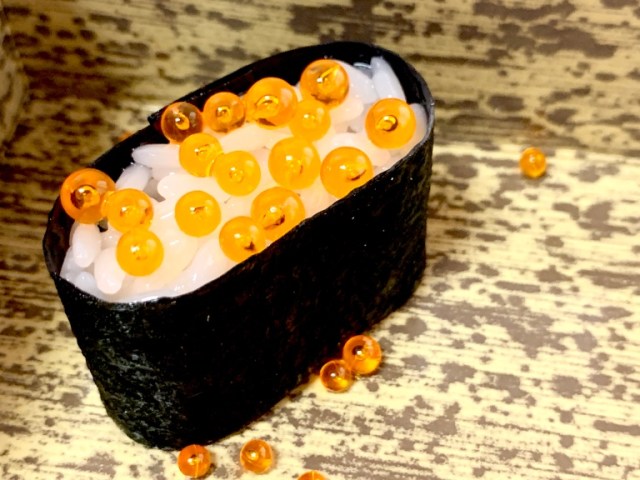
Plastic sushi reaches a new level of craziness with the new ikura gunkan model.

Part of what makes sushi so delicious is its simplicity. After all, a standard piece of sushi really only has two parts, a block of rice and a slice of fish.

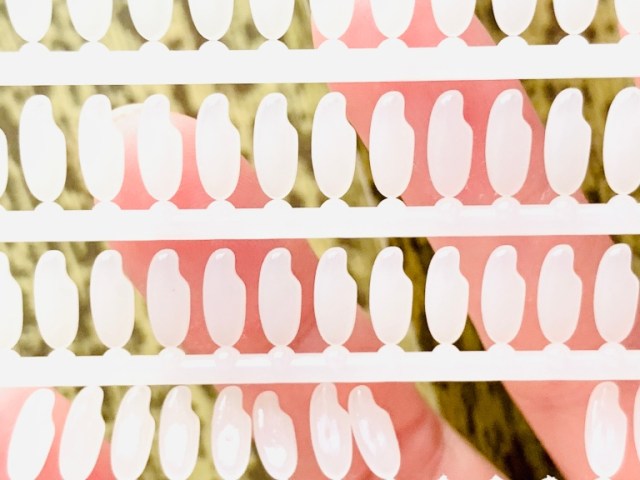
So when Japanese plastic model maker Syuto released tuna and salmon sushi models kits earlier in the year, we thought they couldn’t take more than a few minutes to put together, what with the slice of fish being just two simple plastic pieces. Then we found out that each grain of rice is a separate piece.

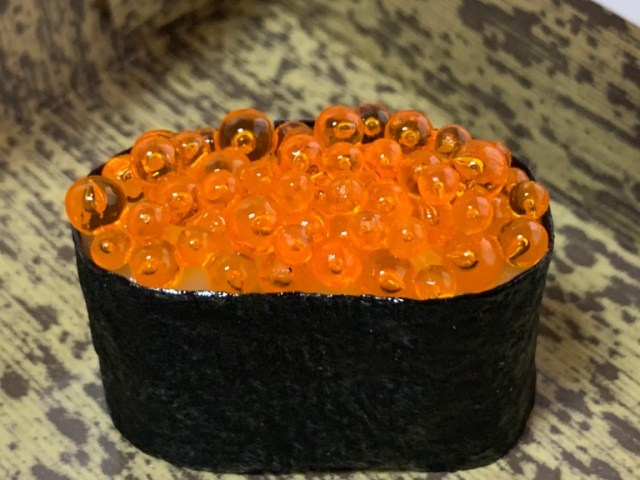
Now, Syuto is back with an even crazier kit. This one is a gunkan-style (seaweed wrapped) piece of sushi, and this time not only is each grain of rice its own individual piece, but so is each and every piece of ikura, or salmon roe!

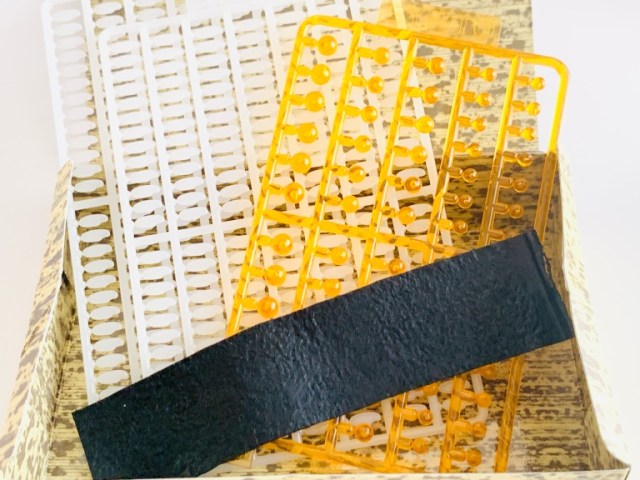
Syuto actually did the research to figure out how many grains of rice and salmon eggs there are in an average piece of ikura sushi, and came up with 364 pieces of rice and 64 eggs. Add in the singular strip of nori (seaweed), and all together there are 429 pieces in this single-piece-of-sushi model.

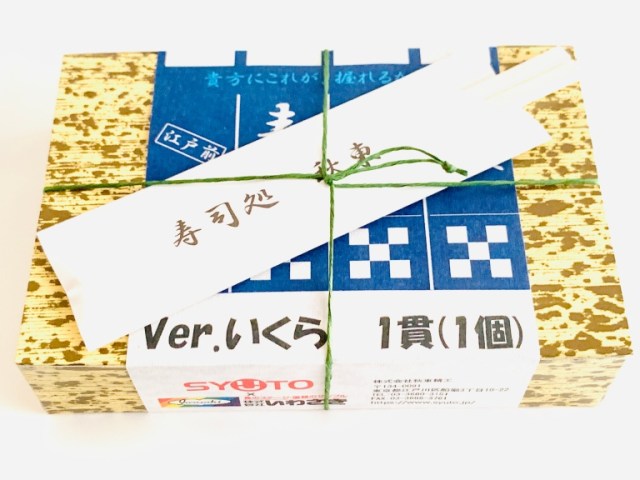
▼ The kit even comes in a package styled after the takeout boxes used by traditional sushi restaurants in Japan.

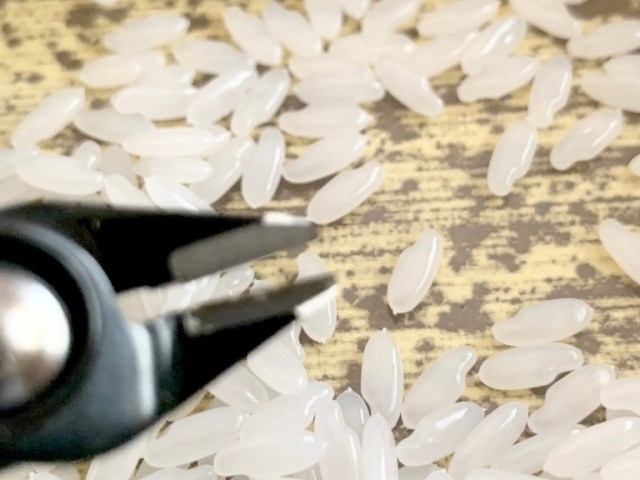
Step 1 (actually Step 1 through 364) is to remove the grains of rice from their frame, so we got to work plucking them out.

Removing them by hand is no problem, but you might end up with some bits of hanging plastic as you pull them away from the frame. If that happens, a quick snip with a pair of needle-nose pliers should remove the unwanted excess.

As we got further into the process, we found it mysteriously relaxing. It only requires low-level motor skills, so it’s not difficult or frustrating, but having so many pieces of rice to prep kept our minds focused enough that they didn’t have time to stray to thoughts of stress, anxiety, or any other mental unpleasantries that can build up in your daily life. It was like the rest of the world faded away, leaving just us and the rice.

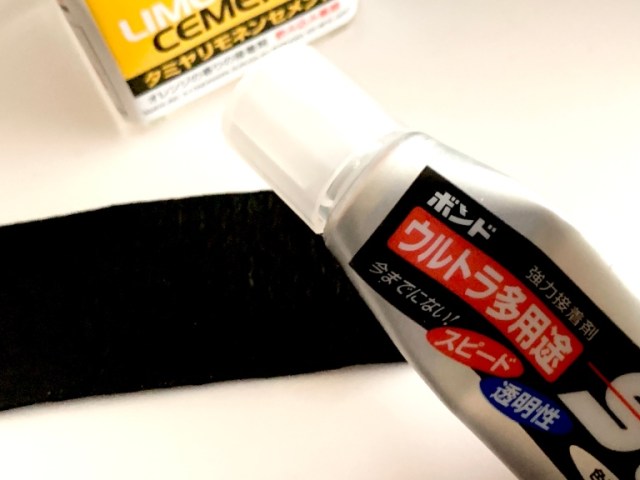
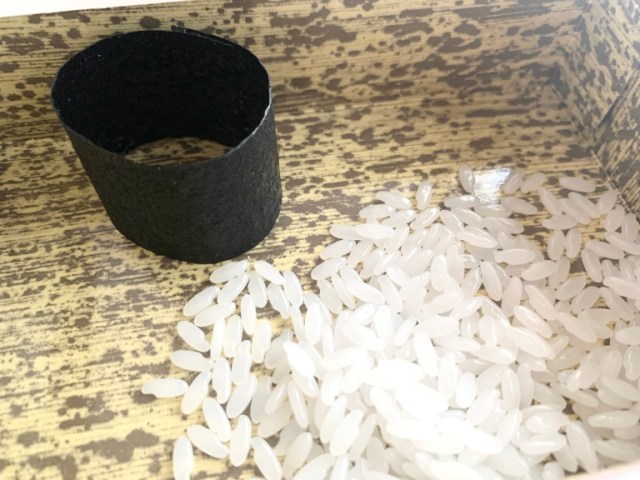
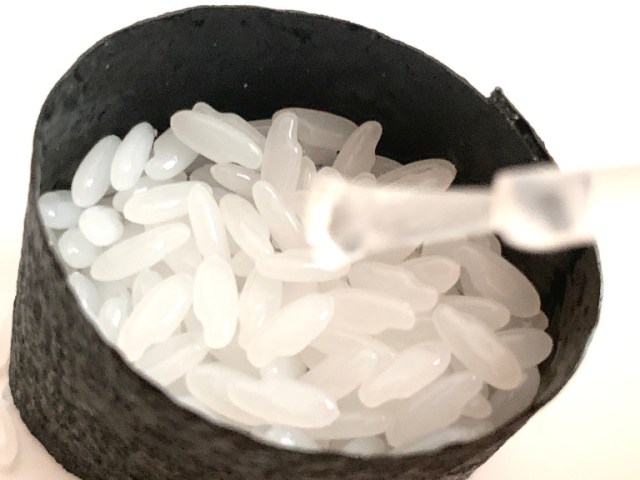
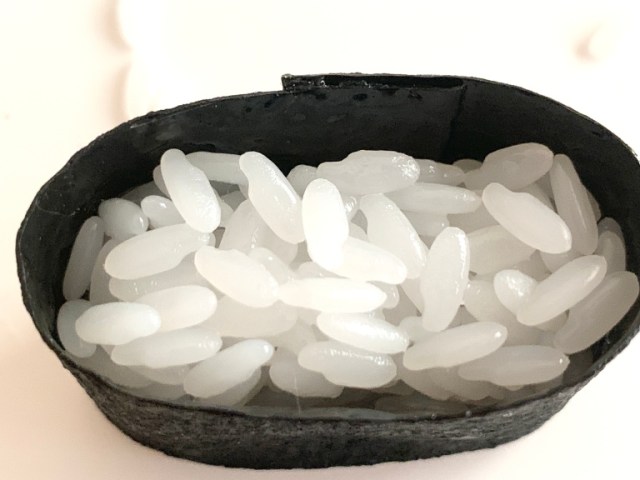
Once the rice was done, the next thing to work with was the nori, which is one long, pliable PVC strip. If we were making our plastic sushi exactly like how we’d make a real one, we’d form a complete block of rice first, then wrap the seaweed around it. However, to make sure we got a nice oval shape, we instead decided to curve the plastic seaweed into a loop first, then fill it with rice.

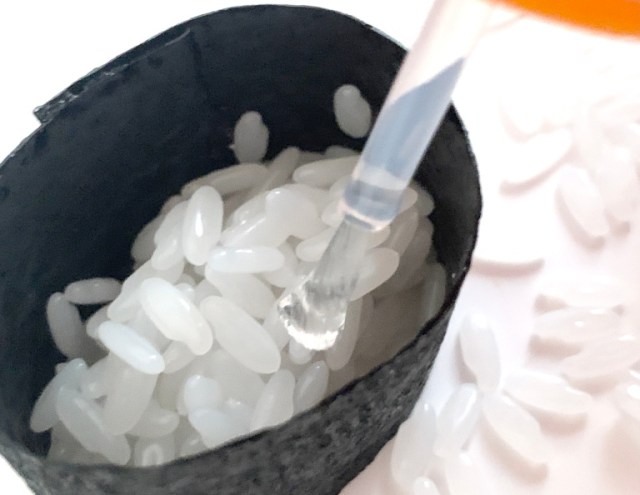
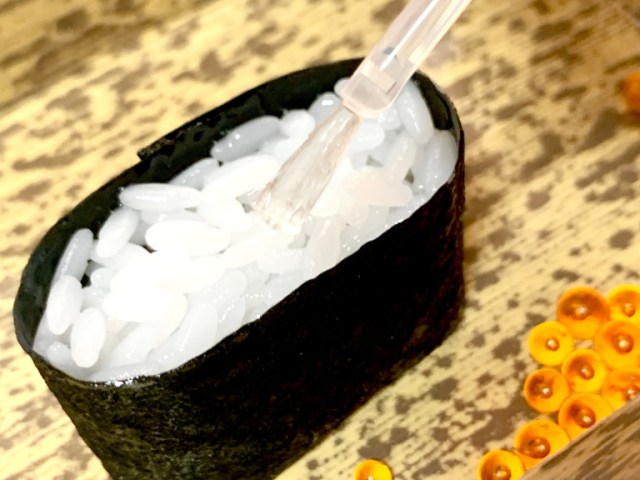
After using some adhesive to close the loop, we began pouring in the rice, bit by bit. Between pours we used a brush to apply a top layer of adhesive, since the plastic rice grains won’t stick together on their own like real rice does.

It’s important to add the rice gradually, since you’ll need to occasionally smooth out the new pieces to keep the visual effect looking fluffy, not craggy.

Before long, though, we got into a steady rhythm, and again there was something soothing about having a manageable cycle to focus on.

It took about 90 minutes to assemble the 364 pieces of rice and their seaweed wrap. Next it was on to the ikura itself!

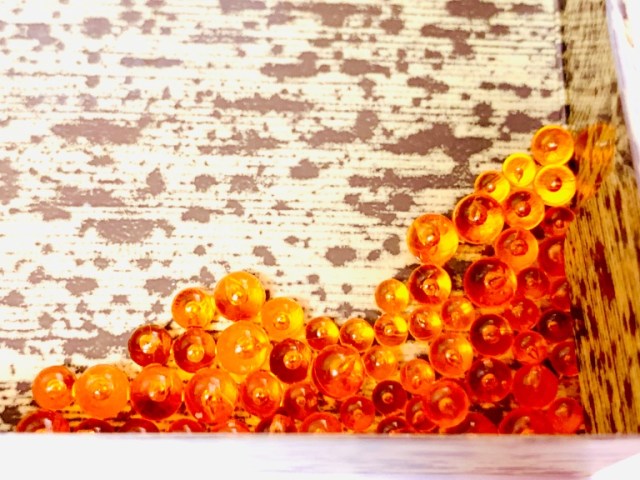
Like the rice, the salmon eggs can be popped out of their frame by hand. However, we’d recommend using pliers to remove them instead. This will cut down on the amount of extra plastic hanging off at the separation point, and since the ikura is bigger and rounder than the rice, and also going to be the very top section of the model, you want them to look as nice as possible.

▼ The 64 pieces of ikura are made up of12 large, 24 medium, and 28 small eggs.

Once you’ve got the eggs popped and smoothed, adding them is pretty much the same process as with the rice: apply a top layer of adhesive to the sushi piece, then add the ikura on top, and repeat.

Because there are fewer eggs than grains of rice, and because even the small eggs are bigger than the grains, arranging them only took about 10 minutes, and then we were done!

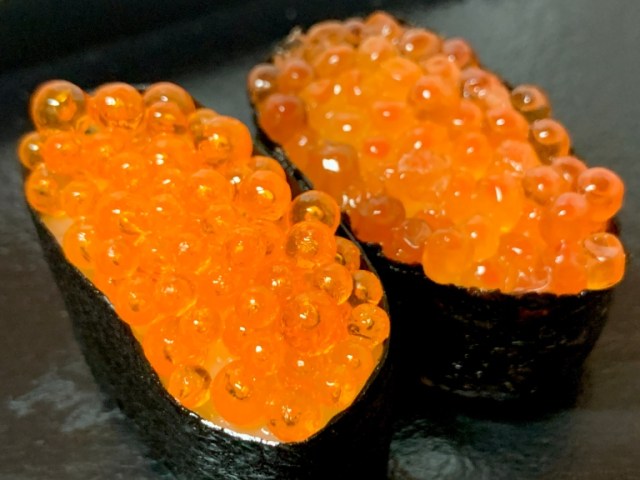
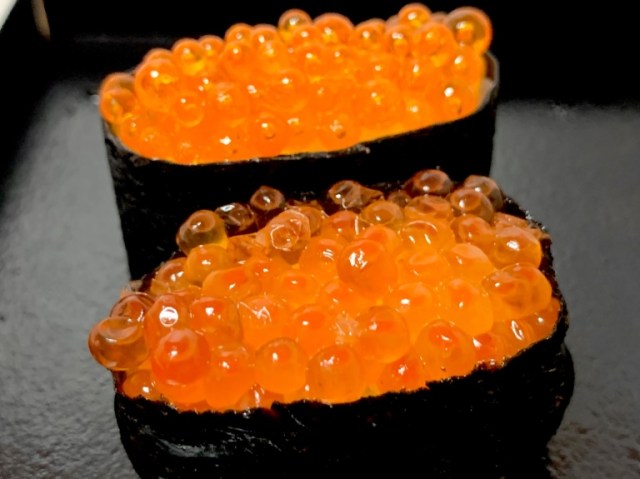
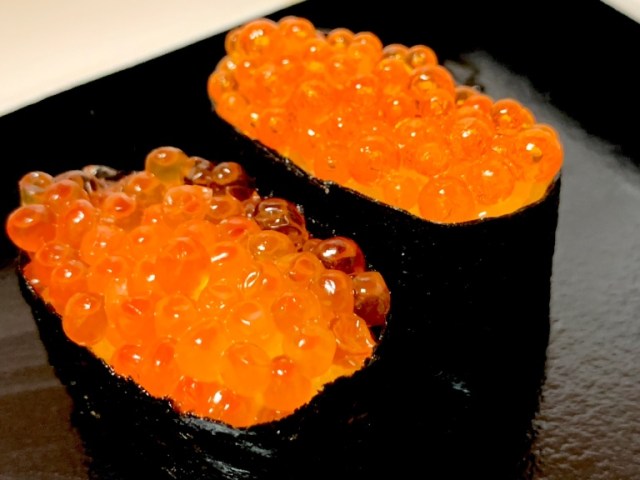
The finished kit is amazingly realistic looking. How realistic?

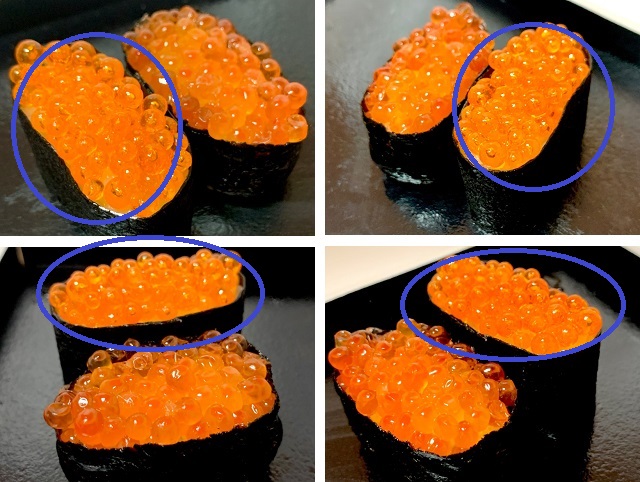
No, we didn’t make two sushi models. The above photo is of the plastic ikura model next to a piece of actual, edible ikura sushi, as are these.

So which one is the plastic sushi, and which one is the real one? We’ve circled the model in the photos below.

With simple steps and no need to apply paint or decals, Syuto’s Sushi Puramo ver. Ikura, as the ikura sushi kit is officially called, is easy enough for even complete newbies to put together. At the same time, the repeating nature of the assembly process means that this isn’t a kit about challenging yourself, but more about keeping your hands and mind just occupied enough so that you can relax. If that sounds like the model-building session you’re in the mood for, the kit can be purchased here through Amazon for 1,540 yen (US$13.50). We highly recommend picking up some real sushi too, though, because you absolutely will get hungry while working on the kit.

Photos ©SoraNews24
● Want to hear about SoraNews24’s latest articles as soon as they’re published? Follow us on Facebook and Twitter!

Miss Universe 2021 Japan entry slammed for wearing “dead person’s kimono”

$
0
0

“Cool Japan” take on national costume criticised as an “insult” to Japanese culture. 

The 70th Miss Universe pageant was held at Universe Dome in Eilat, Israel, this year, with 80 contestants from around the world vying to take home the title.

Here in Japan, all eyes were on the Japanese contestant, Juri Watanabe, when she strutted out on stage in front of millions for the National Costume Show on 10 December. While Watanabe looked amazing, and held herself with poise like the seasoned professional she is, people in Japan fired up about what she was wearing, with many calling it an “insult” to Japanese culture.

▼ Take a look at the Japan entry, cued up to play in the video below

As the host says in the video, the costume is designed to celebrate “the incredible Japanese Harajuku fashion culture“. This design inspiration is likely where the problems started, because rather than showcase the national costume to the world in a modern way that remains sensitive to the culture of the country, this costume ended up mashing together stereotypes that are known to rub people in Japan up the wrong way.

Some commenters noted that the beckoning cat figures and Sailor Moon-esque cosplay aesthetic played into the stereotypical image of “Cool Japan”, while others in tattoo-averse Japan wondered why “日本”, the kanji for “Japan”, was scrawled across the model’s chest. Others took issue with the Japanese flags on the sleeves and the chrysanthemum crest of the Imperial Family on the belt.

Another thing that bothered people was the way the kimono was folded over the model’s chest — right over left, which is only seen on kimono worn by dead people.

Seeing a kimono folded this way has a triggering effect on people in Japan, who make the connection with the deceased when they see it, so when it was shown on an international stage to represent their country, online commenters didn’t hold back with their opinions.

“Well — this is how a deceased wears a kimono; The chrysanthemum emblem is exclusive for the Emperor; Tattoos are taboo in Japan.”
“Don’t insult Japan!! Don’t insult Imperial House of Japan!! Don’t insult Kimono!!”
“It is a style worn by the deceased, so many Japanese people find it very uncomfortable. Is she dead?”
“To use this (chrysanthemum) symbol on a costume with the same pattern as the deadly [sic] costume is unbelievable to me. It is a horrible insult.”
“It seems that Japanese people weren’t involved in this at all, despite it representing Japan.”
“I can feel the designer has the great respect and admiration of Japanese culture but it seems there’s poor understanding of it…”

That last commenter is onto something there, because rather than have a Japanese designer come up with the costume concept and design, Israeli designer Aviad Arik Herman was enlisted for the job, to commemorate the 70th anniversary of the establishment of diplomatic relations between Japan and Israel.

However, the Embassy of Israel in Japan posted these photos of the costume, along with the designer, on 2 December, which suggests they didn’t have any issue with the design.

While the embassy and others involved in the Japan entry haven’t responded to the criticism, it’s likely they were pleased with the result, as Japan placed in the top 16. For critics in Japan, though, the results of a competition amount to nothing if it means the country’s culture ends up tarnished in the process.

And as for the costume being a “salute” to the one worn by Israeli pop star and Eurovision song contest winner Netta, well, her kimono-inspired outfit looked very different.

Source: Jin
Featured image: YouTube/Miss Universe
Insert images: YouTube/Miss Universe

● Want to hear about SoraNews24’s latest articles as soon as they’re published? Follow us on Facebook and Twitter!

Japan’s number-one cosplayer Enako makes jaws drop with ‘nude’ bath photo

$
0
0

Is it still cosplay if you can’t even see the costume anymore?

Japan is home to a lot of successful cosplayers, but none of them are as well-known as 27-year-old Enako, who draws massive crowds at events and earns a sky-high income for her picture-perfect poses and friendly personality.

Recently, Enako has been dipping her toes into the world of gravure modelling, appearing as a covergirl for Shonen Weekly Champion and revealing a whole lot of skin in a special “Off Costume” photo book sold at stores around Japan.

It looks like the cosplayer is getting more and more comfortable in front of the camera with increasingly diminishing costumes, as she surprised fans with even more of a flesh-baring reveal this week when she posted this photo online.

▼ The message accompanying the image simply says “Bath”.

The photo requires a bit of a double-take, because Enako looks like she’s sitting in a bath with absolutely nothing on. However, upon closer inspection, the straps of her light-pink underwear become visible, causing fans to slump back in their chairs and leave comments like:

“I was super surprised – I thought she was nude!”
“Taking a bath with clothes on is a breach of etiquette!”
“It still looks to me like she’s not wearing anything whatsoever…”
“What type of ‘costume’ is this?!”
“Still, her poses are always amazing!”

It just goes to show that Enako knows how to pose in absolutely anything — even when her costume is so tiny you can barely see it. There are more poses where that one came from too, as Enako says this image is a ‘candid shot’ from a photo shoot she did with Shukan Flash magazine, which is on sale now with her image on the cover.

As Enako’s costumes decrease in size, her star power increases exponentially, so who knows what we’ll see her posing in for her next appearance!

Source: Otakomu
Featured image: Pakutaso

● Want to hear about SoraNews24’s latest articles as soon as they’re published? Follow us on Facebook and Twitter!

Japan’s number-one cosplayer Enako shows us her cosplay costume room【Video】

$
0
0

A room so huge it’s more like a warehouse.

For a lot of cosplayers, earning a steady income from cosplaying is the ultimate dream. One woman living that dream is 27-year-old Enako, who’s earned the moniker of “Japan’s number one cosplayer” due to the massive crowds she draws at events and her whopping income, which is close to half a million US dollars a year.

There’s a lot of work that goes into being the country’s number one cosplayer, though, and Enako recently shared some of what it takes to run her business in a recent video on the Business Drive YouTube channel.

In the video, Enako opens the door to what’s described as a “costume warehouse”, although Enako humbly refers to it as a “costume room”, which her office looks after for her. She says she hasn’t counted all the costumes in the room, but estimates there’s around 400-500, all packed away neatly in clear boxes.

You can take a look at Enako’s Costume Warehouse in the cued-up video below. While the video doesn’t have English subtitles, you can auto-generate a translation by clicking on the gear icon in the play bar.

Some of the main takeaways from the video are the fact that Enako is a huge fan of Baki the Grappler, and she proudly describes herself as an otaku who likes to cosplay for fun, even outside of work. She also talks about some of the less-than-glamorous aspects of her profession, saying she receives her fair share of awful comments from strangers online and has been bullied on the Internet in the past.

What pulls her through the dark moments, though, is her love for the work and otaku content. And that love shines through in the way she models her costumes, which are thankfully preserved safely in her costume room.

▼ According to Enako, there’s even a room in the back, which wasn’t featured in the video, where wigs and moulded items like swords and staffs are kept.

People online were in awe of Enako’s collection, saying:

“Wow, it’s such a big space!”
“This is incredible!”
“It’s like an Ikea warehouse!”
“What an amazing room tour!”
“Everything is sorted so perfectly!”

“Such an eye opener to see behind the scenes of a pro cosplayer!”
“It’s like a theme park! I wanna buy a yearly pass!”
“Her annual income is huge, but it looks like the cost of costumes, room rental, style maintenance, shooting costs, etc. are huge as well.”

It’s interesting to get a glimpse into the world of the country’s most well-known cosplayer, and see the work that goes into her sky-high income. Although now that Enako is making a name for herself in the world of gravure modelling, her latest outfits are a lot skimpier, so they won’t be taking up much space in her costume warehouse.

Source: YouTube/ビジネスドライブ! via Otakomu
Featured image: Twitter/
@enako_cos
● Want to hear about SoraNews24’s latest articles as soon as they’re published? Follow us on Facebook and Twitter!

Cosplay costume room tour by Japan’s number-one cosplayer Enako is an eye-opener【Video】

$
0
0

A look at the anime and manga character costumes that earn Enako millions of yen.

We’ve seen a lot of room tours on YouTube, but it’s not every day we get to see a cosplay costume room tour, let alone one by Japan’s most lauded and well-known cosplayer, Enako.

The 27-year-old draws huge crowds at events and earns a whopping income through cosplaying, which is said to be close to half a million US dollars a year. So what does her cosplay collection look like? Well, for starters, it’s huge, taking up a whole room and then some.

Then, it’s all neatly arranged into boxes for easy retrieval, and inside those boxes lies a whole treasure trove of pro-quality costumes that bring to life some of the country’s best known anime and manga characters.

▼ Enako’s Rem cosplay at Summer Comiket 2019 was a personal costume that got so much attention it led to her becoming an official Re:Zero cosplayer.

Previously, Enako gave us a sneak peek into her costume room when she appeared on the Business Drive YouTube channel in January. During that appearance, she told viewers there was a back room for wigs and big props like swords but she kept that under wraps for her own room tour video, which was posted to her official YouTube channel this week.

In the room tour, Enako brings out some of her most impressive costumes and props, including an elaborately designed mermaid tail for Shirahoshi from One Piece. While the video doesn’t have English subtitles, you can auto-generate a translation by clicking on the gear icon in the play bar.

▼ Check out Enako’s cosplay costume room tour below.

Some of the highlights from the video include that giant mermaid tail, which has a slit in the back that allows her to walk with it, and her Dark Magician Girl accessories, which Enako says she would like to decorate, but can’t for fear they might get broken.

She also reveals some other gems, like her system for storing her 200-plus wigs, which are individually zipped up in clear folders from the 100-yen shop and placed in bookshelves.

Enako’s Zinogre Long Sword from Monster Hunter is a thing of beauty, although she says she hasn’t been able to step out with yet, as she’s been busy with work cosplays and this is one of her personal cosplay accessories.

It’s nice to see that despite her fame and ever-growing income, the professional cosplayer still indulges her passion for cosplaying as her favourite characters. And with fans expressing a desire to see more hidden gems from her cosplay costume room, we might get to see more of her favourite outfits in future videos — if she can find the time to squeeze it into her busy schedule of gravure photo shoots and raunchy photo collections.

Source: YouTube/えなこ via Otakomu
Images: YouTube/えなこ

● Want to hear about SoraNews24’s latest articles as soon as they’re published? Follow us on Facebook and Twitter!


Japan’s plastic model capital installs working plastic model-style payphones【Photos】

$
0
0

Plastic Model-ization Plan welcomes its newest public art pieces.

On Sunday, Shizuoka City put a lot of smiles on people’s faces by installing some new pay phones. That might not seem like anything special enough to get happy about, seeing as how mobile phones have become pretty much ubiquitous for anyone junior high age or older in Japan, but these aren’t just any pay phones.

They’re plastic model pay phones.

Shizuoka bills itself as “a model city,” not just because it thinks of itself as a pretty nice town, but also because the city produces 80 percent of Japan’s plastic model kits. With Japan’s unabashed passion for the hobby, that makes models a major part of the local economy, with the headquarters of major kit maker Tamiya, which tweeted the above photo, located in Shizuoka City.

▼ Telecommunications provider NTT West Japan, which operates the phones, also shared a snapshot.

The phones are located outside the north exit of Shizuoka Station, where they can provide a playful welcome to visitors who’ve just arrived by train. And yes, the two phones on the left and right sides of the frame are actual functioning payphones, not just decorations, which can be used to make calls.

The model phones are part of the Shizuoka City Plastic Model-ization Plan, a PR campaign with public art pieces with a plastic model aesthetic. Last year Shizuoka unveiled a plastic model-style mail box outside city hall, and there are also monuments at the south entrance to Shizuoka Station and outside the Twinmesse Shizuoka convention center where modeling fans can pose like they’re part of the parts frame.

As the newest pieces though, it’s now the phones’ turn in the spotlight, and reactions on Twitter have included:

“Sweet! It’s 1:1 scale!”
“Gonna have to use some big pincers to remove those from the runner.”
“Seriously, I would buy a plastic model of the plastic model phones.”
“I totally want to see this in person!”
“Gonna have to go to Shizuoka and check this out.”

Though there’s less and less need for public phones in the modern era, places like train stations do need to keep at least a few available for travelers whose mobile phone may have gotten lost, damaged, or had its battery die, and this is a clever way to fulfill that obligation while also providing some fun even for people who won’t be using the phones themselves.

Source: Twitter/@tamiyainc via IT Media, Shizuoka City Plastic Model-ization Plan
Featured image: Twitter/@NTTWestOfficial
● Want to hear about SoraNews24’s latest articles as soon as they’re published? Follow us on Facebook and Twitter!

What’s it like to pole dance on a rooftop in Tokyo?

$
0
0

The truth behind these photos is not as glamorous as it seems.

As people enter their mid-life years, some might find themselves splurging on a sports car or becoming romantically involved with a younger partner. Our reporter, Mr Sato, though, chose to deal with ageing differently, by signing up for pole-dancing lessons.

It’s been five and a half years since Mr Sato first twirled around a pole, and in that time he’s grown personally and professionally with each performance. In fact, he credits pole-dancing with giving him the confidence to recently pose for his first gravure photoshoot, and ever since then, he’s been keen to get in front of the lens again, this time with a pole between his legs.

Being a man of action, Mr Sato decided to take matters into his own hands and arranged his very own photo shoot, with the help of a few buddies and a photo studio, who let him use the rooftop as the location for his pole-dancing photos.

As for the pole itself, Mr Sato borrowed that from the pole-dancing studio he attends, and it was heavy — the total weight came to 102 kilograms (225 pounds), with the pedestal weighing 86 kilograms and the pole weighing 16 kilos.

▼ There’s a lot to carry when pole-dancing on the go.

Thankfully, Mr Sato once worked on track maintenance for Japan Rail in his early twenties, so he’s no stranger to lifting heavy objects — as part of his job he used to manually replace the sleepers on the railroad tracks, which weighed 60 kilos each.

The rooftop location, however, presented a whole new set of challenges, as there was no elevator so Mr Sato had to carry the equipment up four flights of stairs on his own. Plus, it was a hot day, with the temperature already exceeding 30 degrees Celsius (86 degrees Fahrenheit) when he arrived at 8 a.m.

▼ It was sweaty work, but Mr Sato eventually managed to set the pole up on the rooftop for the photoshoot.

Already, this was shaping up to be a less-than-glamorous day, but Mr Sato was determined to get the photos he’d dreamed of, with the sky behind his legs and the wind rushing through his hair. So he spent some time stretching his muscles, diligently hydrated himself, and approached the pole for his first pose of the day.

The pole is about 3 metres (9.8 feet) high, so it’s a sturdy structure, but it wasn’t as sturdy as the floor-to-ceiling types Mr Sato is used to working on. After seeing his first photos, though, Mr Sato knew he could make things work, but then he found himself coming across another unexpected problem…

▼ …sweat.

The friction between your body and the pole is part of what helps you stay in position, so having dry skin is helpful. Even in the studio, it’s important to keep the air conditioner on during summer to help keep your body dry while pole-dancing, but here in the great outdoors, there was no cooling equipment to keep our pole dancer dry.

▼ As a result, Mr Sato found himself sliding down the pole more than usual, so he had to grip on tight to hold his poses.

Mr Sato’s muscles were getting a workout with this rooftop photoshoot, but as he wiped his body down and donned his favourite robe, the sun broke through the clouds, the wind rushed through his hair, and he felt like a pole-dancing queen.

▼ Another impressive photo for his portfolio.

Remembering what he’d learned from his gravure photoshoot, Mr Sato extended his arm and leg, flexed his muscles, and looked off into the distance with a wondering stare.

▼ And then his sweat caused him to slowly slide down the pole.

If you didn’t know the backstory of the photoshoot, you’d definitely think our reporter was flying high in the sky, without a care in the world. Mr Sato likes to keep things real, though, so he’d like to share another behind-the-scenes photo to show us all what it was really like filming on the rooftop that day.

The photos captured fleeting moments within 90 minutes of Mr Sato sliding down the pole, while two equally sweaty blokes waited impatiently to return to the air-conditioning indoors.

In the end, though, Mr Sato deemed the photoshoot a sweaty success, and he now has a lot more admiration for the cosplayers who spend whole days out in the heat at summer Comiket with smiles on their faces.

The photoshoot is the latest accomplishment in Mr Sato’s pole-dancing career, and he even got to make good use of his custom-made, one-of-a-kind London boots. It just goes to show the sky’s the limit to what you can achieve when you put your mind to things!

References: SPIRAL MODEOPALUS
Images © SoraNews24

● Want to hear about SoraNews24’s latest articles as soon as they’re published? Follow us on Facebook and Twitter!

Last Samurai star Ken Watanabe cooks with daughter Anne in viral YouTube video

$
0
0

Once-strained relationship looks very different now, as Anne starts a new life overseas. 

Japanese actor Ken Watanabe is a well-known face to global audiences, having starred in a number of Hollywood films such as Last Samurai, Memoirs of a Geisha, Batman Begins, and Letters from Iwo Jima.

However, Watanabe isn’t the only famous face in his family, as his 36-year-old daughter Anne is also well-known, having worked as a model from the age of 15 before going on to act in Japanese TV dramas and films.

Like a lot of famous families, both father and daughter have had their private lives exposed to the world on a few occasions, with the older Watanabe accused of adultery during an acrimonious divorce from Anne’s mother, Yumiko, while Anne was in high school. This was said to have caused tension between father and daughter, exacerbated by the fact that he then married his second wife, Kaho Minami, months after the divorce was settled in 2005, and then moved to Los Angeles for a period with his new wife and stepson, whom he legally adopted.

With her mother in debt from the court costs associated with the divorce, Anne didn’t have the finances to pursue further education, so she dropped her father’s surname and started working as a model, forging a career for herself under the mononym “” (“Anzu“, or “apricot“, but read as “An” in Japanese).

▼ Anne has appeared in magazines like Japan Vogue and walked the runway for big names like Anna Sui, Tommy Hilfiger, Karl Lagerfeld, and Marc Jacobs.

Fast forward to 2016, and Anne’s father was diagnosed with stomach cancer — he’d successfully overcome acute myeloid leukaemia in 1989 and again in 1994 — undergoing an operation which eventually gave him the all-clear.

That same year, Anne gave birth to twin girls, following her 2015 marriage to actor Masahiro Higashide, whom she starred with in the 2103 TV drama Gochisosan. In 2017, Anne gave birth to a son, but in 2020, Anne divorced her husband after it was revealed that he’d been having an affair with actress Erika Karata since 2017, when Karata was 19, and while Anne was pregnant with their son.

Anne now has sole custody of her three young children, and looks to be starting a new chapter in her life by opening an Instagram account in November last year…

…and starting a YouTube channel where she sings covers while playing guitar, vlogs about her daily life, and cooks some awesome meals in her kitchen.

Her YouTube channel is now the talk of Japan, after her latest video reached the #1 trending spot, and starred none other than…her famous father.

▼ Take a look at the video below, which has English subtitles and currently over 6.5 million views:

In the video, Anne and her father cook an amazing meal using fresh vegetables from his hometown of Niigata, and Nagano, where he now lives.

While the meal is impressive, it’s not what’s driving the views — it’s the relationship between father and daughter in the kitchen that’s really grabbed everyone’s hearts, and it’s made even more touching given their well-publicised private struggles.

▼ These two have been through a lot in the past, but it appears that events in recent years have brought them closer together.

While it’s heartening to see Anne and her father happily chatting and sharing food, it’s bittersweet to learn that Anne is now leaving Japan and moving to France with her three children, and their dog, Jiro.

Anne’s father supports the move, saying it’ll be a great experience for her and the children, but he says he has one request: that she text him every day.

▼ To that, she replies:

By her own admission, Anne’s family isn’t “normal” in the traditional sense of the word, but their conversation in the kitchen is far more relatable than they might think, having struck a chord with viewers across the nation.

With the view count still rising on the video, Anne’s social media following is growing larger by the day, and fans are now curious to see what her new life in France will look like. Hopefully she and her family will adapt well to their new life abroad, and if they ever want a taste of home in France, we’ve got some great Japanese noodle and confectionery suggestions for them!

Source, images: YouTube/杏/anne TOKYO
● Want to hear about SoraNews24’s latest articles as soon as they’re published? Follow us on Facebook and Twitter!

Who the heck is this dancing foreigner advertising products in Japan?

$
0
0


The mystery deepens once you enter this store.

Our Japanese-language reporter Haruka Takagi loves to travel around Japan as it opens her eyes to new sights, and her mouth to new ice creams.

On a recent trip to Hokkaido, however, Haruka came across a sight she’d never seen before, and it baffled her. No, it wasn’t a brewery at a temple — she’s seen that before. It wasn’t a wasp larvae bento — been there, done that too.

The sight that confounded Haruka was waiting for her at the Akkeshi Gourmet Park Conchiglie Road Station in Akkeshi, a town in the eastern part of Hokkaido, and this is what it looked like.

That’s right — Haruka had found a life-sized panel of a man who appeared to be dancing in an unzipped hoodie. “If he had a life-sized cutout dedicated to him, this man must be famous”, Haruka thought, and so she stepped in for a closer look.

Nope. She’d never seen this man before, and even more, she had no idea why he was there. She looked around the panel for a mention of his name, but couldn’t find one anywhere. The only thing she could make out was the sign he was holding in his hand, which was shaped like an oyster and simply said the Conchiglie Road Station had won a satisfaction ranking for 12 continuous years.

▼ What’s your name, mystery foreigner?

This roadside station is famous for oysters, which are a specialty of the area, but what was this mystery man’s connection to it all? Haruka’s inquisitive reporter side couldn’t let it go, so she stepped through the sliding automatic doors to see if she could get to the bottom of the mystery.

However, upon entering, she became even more confused. There he was again, and now it was as if he was taunting Haruka, challenging her to discover his identity.

She decided to head over to the fridge to clear her head with a bottle of water, but…

▼…there he was again!

There was a lot of information about the water inside the bottle, but again, no mention of this guy’s name, nor his connection to it all.

Her curiosity piqued, she stopped off at the bathroom to think about it all, and lo and behold…

▼ …there he was, AGAIN!

▼ Was there no escaping this man?

Haruka exited the bathroom and headed over to the souvenir area, and — yep, you guessed it — there was the mystery man yet again, but this time he was on a screen, placed between rows of oyster soy sauce bottles, dancing up a storm in what appeared to be a commercial for the roadside station.

▼ Now she had him dancing on an endless loop, and this time he was baring even more skin.

Haruka figured he was probably a well-known face to locals, but as she lives on the mainland, this was her first time seeing him. His dancing in the commercial was so lively and intense that even now, when she closes her eyes, she can see his body writhing vividly.

Of course, she thought he was handsome, but her growing obsession with him was more to do with her reporter’s curiosity. Ever since she was young, Haruka has always wanted to get to the bottom of things, and she wasn’t going to let this man’s backstory allude her anymore. So she strode up to the clerk at the counter, where she had this conversation:

Haruka: “Is the male dancer I’m seeing all over this roadside station a dancer from Akkeshi?”

Clerk: “I’m sorry, but we don’t even know who this person is.”

Haruka: “Huh?!?!?!

Haruka couldn’t believe that a totally unknown person would be given a life-sized panel and so much attention at such a big Road Station like this — in Japan, that would only happen for a tie-up with a famous celebrity.

Haruka: “Do you really not know? What do you mean by that?”

Clerk: “I literally have no idea who he is.”

Haruka: “So even though he’s on all these exclusive products around the store…you don’t know who they are?”

▼ Haruka didn’t hold back with her questioning, pointing out all the ads that surrounded them.

Clerk: “I really don’t know.”

Never one to let a dead end stop her from her investigations, Haruka decided to direct her questions further up the ladder, by calling up the company that manages the roadside station. However, according to the PR rep she spoke to, they also had no idea who he was, saying:

“The male dancer is from paid video material selected by the production company, so we at Conchiglie have no information about him at all.”

Well, this really was a dead end. During her investigations, she discovered that this man had appeared in five commercials for the Conchiglie Road Station since 2018, with a new one appearing every year.

▼ Every one features some seriously enthusiastic dance moves…and some bare skin.

If you’re ready to have his moves imprinted on your mind, feel free to check out a few of the commercials he appears in below.

▼ His debut in 2018

▼ A camo costume change for the 2021 commercial

▼ The latest ad

Who the heck is the man behind all those bold and sexy dance moves? Haruka was now more curious than ever, and all this talk of oysters had her hungry for them as well. So she sat down with a cream croquette (180 yen [US$1.28]), an oyaki dumpling (150 yen), and yes — a bottle of that water.

Both the croquette and dumpling contained oysters, and they were absolutely delicious. These were like gourmet versions, and Haruka understood why this Road Station had become so renowned for its food.

What she didn’t understand, however, was the identity of the man who was so prominent at the Road Station. Even as she went to leave, he was there, dancing an endless goodbye.

▼ Before she got back on her bike for the rest of her Hokkaido adventure, though, she couldn’t resist stopping to mimic his pose.

Whoever he is, his dance moves do add a sense of energy and excitement to the place, so much so that Haruka ended up succumbing to his charms in the end. The commercials seem to have gone over well with the public too, with a number of commenters praising them for their impact, and some even saying they’re addictive to watch.

Still, Haruka would love to know who this man is, and whether he knows that he’s the face of a Japanese roadside station. If you have any leads, please let us know, and if you have any leads on the mystery of Suzy, the Yamazaki bread girl, we’d love to hear them too!

Store information
Akkeshi Gourmet Park Conchiglie Road Station / 道の駅 厚岸グルメパーク 厚岸味覚ターミナル コンキリ
Address: Hokkaido-ken, Akkeshi-gun, Akkeshi-cho, Suminoe 2-2
北海道県厚岸郡厚岸町住の江2丁目2番地
Open: 9:00 a.m.-8:00 p.m. (April-Sept); 10:00 a.m.-7:00 p.m. (Oct-Dec); 10:00 a.m.-6:00 p.m. (Jan-March)
Closed Mondays (Tuesday if the Monday is a public holiday); Open every day in July and August
Website

Photos © SoraNews24
● Want to hear about SoraNews24’s latest articles as soon as they’re published? Follow us on Facebook and Twitter!

Jamiroquai doll from Japan lets you control your own Virtual Insanity 【Video】

$
0
0

The realism here is off the charts.

Virtual Insanity” by Jamiroquai was one of the biggest hits of the ’90s, earning a Grammy Award for Best Pop Vocal Performance by a Duo or Group and the music video winning four out of ten award nominations, including Video of the Year at the 1997 MTV Video Music Awards.

▼ In case you need a refresher, here’s the music video, which is still as impressive as it was when it released almost thirty years ago.

Interestingly, the track was actually inspired by a visit to Sapporo in Japan, when frontman and co-writer Jay Kay descended from the snowy landscape into an underground mall that was bustling with noise and colour, which he described as a “whole underground city”.

That Japanese inspiration can be found in the song’s lyrics:

“For these useless, twisting of our new technology
Oh, now there is no sound, for we all live underground.”

So it seems fitting that Jamiroquai is reconnecting with Japan again after all these years, only this time, it’s for a new reason — to create a figure modelled on Jay Kay.

The new figure has been produced by Bandai Namco as part of its S.H.Figuarts range of super articulated figures, with Jay Kay himself overseeing the production of the two different faces included with the model.

▼ The facial features look so real it’s hard to believe this is a photo of the figure and not the man himself.

The figure measure 15 centimetres (5.9 inches) in height, and includes not just the outfit, a miniature version of the one seen in the music video, but several additional extras, listed below:

・Replacement expression part (“YEAH” face)
・Replacement wrist parts (left 3 types, right 4 types)
・1-seater sofa x 2 (paper craft)
・3-seater sofa x 1 (paper craft)

▼ The “YEAH” face

▼ Bandai isn’t joking when it says the model is super articulated — check out the flexibility in the poses it can achieve!

▼ The sofas are a nice touch, as they perfectly resemble the ones in the music video.

▼ With so much attention to detail, you can go all out and replicate the music video yourself, just as Bandai did for the promotional clip below:


The figure is priced at 9,900 yen (US$69.67), which is surprisingly reasonable for an item so detailed. Reservations for the product began on 16 June on the Premium Bandai shopping site, with delivery scheduled for November.

According to Bandai, there’s a chance they’ll be selling these internationally as well, so keep an eye out for it in your neck of the woods! It’s only being made available in limited quantities, though, so be sure to act quick if you see it.

Source, images: @Press
● Want to hear about SoraNews24’s latest articles as soon as they’re published? Follow us on Facebook and Twitter!

Newest Gundam anime robot model kit is made with green tea leaves, smells like green tea

$
0
0

Bandai offers the chance to make a mecha that looks cool and smells nice.

While there’s a tactile element during the building process, once you’ve put the finishing touches on an anime robot model kit, the real payoff is how cool it looks sitting on your desk or shelf. But the newest Gundam kit doesn’t just look cool, it smells nice too.

Manufacturer Bandai Spirits is getting set to release a new Zakupla-kun kit as part of its Gunpla-kun line of super-deformed mecha kits. However, while the ”pla” part those names is short for “plastic,” the Zakupla-kun isn’t made with any simple old petroleum-based plastic. Instead, it’s made from a new material that contains tea leaves.

The material was created as part of a joint project between Bandai and Ito En, one of Japan’s largest teamakers and the company behind the popular Oi Ocha brand of bottled green tea. When making tea, the leaves themselves end up as waste material after they’re steeped and the resulting liquid is bottled, which means Ito En has a lot of used leaves on its hands. At the same time, Bandai is looking for ways to make its model kits more eco-friendly. Together, the two companies have figured out a way to turn used green tea leaves into a resin, which can then be used in the creation of an alternative material to traditional plastic for model kits. Limestone is another key component in the material, which is called Limex.

▼ A diagram showing the path from tea plants in the fields to bottled tea and cool robot

Because of the tea-based resin, Bandai Spirits says this new Zakupla-kun has a slight scent of green tea. That could also explain why it’s the Zaku, and not one of the hero mecha Gundams, that’s utilizing this tea-based building material, since the customary green paint job of the Zaku is evocative of a cup of Japanese green tea.

The official name of the kit is the Gundam Next Future Limited Zakupla-kun. As the name implies, it’s a limited-edition kit that’s going to be offered as part of the upcoming Gundam Next Future-East/West/Digital event that’s taking place on October 6 simultaneously in Tokyo, Osaka, and online, though Bandai has said there’s a chance it might be made available elsewhere at a later date. That limited-edition status doesn’t mean that it’s a hyper-difficult build or super expensive, though, since the Gunpla-kun line is all about accessible fun. It’ll be offered through the Gundam Next Future online shop here once the event gets underway for just 880 yen (US$6). No glue or paint is required for the Gundam Next Future Limited Zakupla-kun, just a pair of pliers/snips to remove the pieces from their runner frames, making this a relaxing kit to snap together while sipping a cup of green tea yourself.

Source: Bandai Spirits via IT Media
Top image: Bandai
Insert images: Bandai Spirits
● Want to hear about SoraNews24’s latest articles as soon as they’re published? Follow us on Facebook and Twitter!

Insanely detailed 900-plus-piece Japanese model kit is…a 1:1-scale sesame dumpling【Photos】

$
0
0

Model maker Syuto continues to push the detail envelope in its food kits.

Usually, you’d expect there to be some sort of direct correlation between the size of a plastic model kit and the number of pieces it has. Similarly, there’s a tendency to assume that the more technology-themed the subject material is, the more parts the model will have, since it’ll have all sorts of technical details to reproduce.

So a model of a goma dango, or sesame dumpling, seems like it should have hardly any parts at all. Delicious as they are, goma dango are very simple desserts, just a spherical dumpling with anko (sweet red bean paste) on the inside and sesame seeds on the outside.

But if you’re planning to pick up Japanese model maker Syuto’s new goma dango model kit and slap it together in a half hour or so, think again, because it has over 900 parts!

That’s because every single sesame seed its own separate piece, which has to be glued in place.

If this particular brand of insanity sounds familiar, you might be remembering Syuto’s previous forays into deceptively simple-looking food-themed model kits. First came their nigiri sushi models, with individual grains of rice adding to a 366-piece count for the set, and that was followed by a 429-piece ikura gunkan sushi set.

As with its sushi models, Syuto’s goma dango model is a life-sized, 1:1-scale model, which in this case translates to a diameter of 4 centimeters (1.6 inches).

Syuto doesn’t list a total number of sesame seed pieces, but between the above photo and the “over 900 pieces” promise, it looks like you get, at the very least, 897 seeds. And just so no one will accuse them of inflating that count, they say they developed the kit by actually disassembling real goma dango and counting how many sesame seeds were needed to coat them.

Another impressive example of the designers’ attention to detail is that in addition to the sesame seeds, there are separate pieces to represent the dumpling dough and the bean paste center. The dough parts make sense, since there are still little gaps between the seeds that you can see through. The bean paste, though, is completely enclosed and won’t be visible at all after assembly, but because anko is part of the actual food, it gets pieces in the model kit.

Syuto’s goma dango plastic model kit is being produced in cooperation with figure maker Good Smile Company, who recently dazzled us with their new Street Fighter and Macross figures at this year’s summer Wonder Festival. Preorders for the goma dango kit, which is priced at 1,540 yen (US$10.25), are open now on both the Good Smile online shop and Amazon Japan (here and here) with shipping scheduled for March.

Source: Good Smile Company via Denfamico Gamer via Livedoor News via Hachima Kiko
Images: Good Smile Company
● Want to hear about SoraNews24’s latest articles as soon as they’re published? Follow us on Facebook and Twitter!


A massive photo collection of the coolest anime figures from Winter Wonder Festival

$
0
0

Photos from the floor of Japan’s biggest convention for anime and video game figures

The most recent winter Comiket wrapped up on New Year’s Eve, but last weekend Japan had its first A-list otaku event of 2024 with the latest edition of Wonder Festival. Held at the Makuhari Messe convention center in Chiba, Wonder Festival is Japan’s largest convention dedicated to anime and video game models and figures, and we had plenty of new designs to turn our camera lens towards.

This year’s winter Wonder Festival featured perennial favorites like the casts of Fate/Grand Order and Azure Lane, as well as some younger series that have solidified their popularity such as Blue Archive and Arknights, plus representatives from the ever-evolving pantheon of VTubers/virtual YouTubers. So, without further ado, let’s take a look at the best of the best from the show floor.

Blue Archive’s Hanako Urawa, from figure maker Oriental Forest

Blue Archive’s Ako Amau, from AmiAmi. Many of the figures on display at Wonder Festival are pre-production versions, shown unpainted.

Blue Archive’s Hibiki (Cheer Squad Version) from Golden Head Plus

▼ Auzure Lane’s Elbe, from Golden Head Plus

▼ Auzure Lane’s Kronshtadt, from Golden Head Plus

Azure Lane’s Noshiro, from Alice Glint

Sabbat of the Witch’s Nene Ayachi, from Alice Glint

Fate/Grand Order’s Abigail Williams, from Amakuni

Fate/Grand Order’s Yang Guifei, from Amakuni

Rent-A-Girlfriend’s Chizuru Mizuhara, from Amakuni

Guilty Gear’s Bridget, from Amakuni

Azure Lane’s Honolulu Present Fire Red, from Ribose

Azure Lane’s Taiho, from Alphamax

Azure Lane’s Indomitable, from Alphamax

Nikke’s Shifty, from Heartsum

A Certain Scientific Railgun’s Mikoto Misaka, from Prisma Wing

Fate/Grand Order’s Morgan, from Aniplex

Fate/Grand Order’s Artoria Caster, from Aniplex

Fate/Grand Order’s Pekora Usada, from Aniplex

Fate/Grand Order’s Lady Avalon, from Aniplex

Tsukihime’s Ciel, from Aniplex

Uma Musume’s Symboli Rudolf, from Claynel

Azure Lane’s Unicorn, from Claynel

Atelier Ryza’s Reisalin “Ryza” Stout, from Claynel

Mushoku Tensei: Jobless Reincarnation’s Roxy Migurdia, from Claynel

Mushoku Tensei: Jobless Reincarnation’s Sylphiette, from Claynel

Demon Slayer’s Kyojuro Rengoku, from Aniplex

Demon Slayer’s Tanjiro Kamado, from Aniplex

Demon Slayer’s Tengen Uzui, from Aniplex

Lycoris Recoil’s Chisato Nishikigi, from Aniplex

Lycoris Recoil’s Takina Inoue, from Aniplex

Blue Archive’s Iroha, from Apex Toys

Azur Lane’s Janus, from Apex Toys

Azur Lane’s Fu Xuan, from Apex Toys

Fushigi no Yumeyutan-Yumeiru no Jikan’s Alice Liddel, from Apex Toys

▼ Nijisanji’s Sukoya Kana, from DMM Factory

Oshi no Ko’s Mem-cho, from DMM Factory

Oshi no Ko’s Kana Arima, from DMM Factory

Oshi no Ko’s Ruby, from DMM Factory

Overlord’s Albedo, from DMM Factory

Fairy Tail’s Erza Scarlet, from DMM Factory

Monogatari’s Shinobu Oshino, from Furyu

Puella Magi Madoka Magica’s Homura Akemi, from Furyu

Puella Magi Madoka Magica’s Madoka Kaname, from Furyu

Date A Live’s Kurumi Tokisaki, from Furyu

Oshi no Ko’s Ai, Aqua, and Ruby, from Kadokawa Collection

Goblin Slayer’s High Elf Archer, from Kadokawa Collection

Date A Live’s Kurumi Tokisaki, from Kadokawa Collection

Strike the Blood’s Yukina Himeragi, from Kadokawa Collection

KonoSuba’s Aqua, from Kadokawa Collection

KonoSuba’s Megumin, from Kadokawa Collection

Puella Magi Madoka Magica’s Madoka Kaname, from Shibuya Scramble Figure/eStream

Puella Magi Madoka Magica’s Homura Akemi, from Shibuya Scramble Figure/eStream

Princess Connect! Re:Dive’s Karyl, from Shibuya Scramble Figure/eStream

Kantai Collection’s Yamashiro, from Shibuya Scramble Figure/eStream

Girls’ Frontline: Neural Cloud’s V, from Shibuya Scramble Figure/eStream

My Dress-up Darling’s Marin Kitagawa, from Spiritale

Oshi no Ko’s Kana Arima, from Spiritale

▼ Hatsune Miku, from Spiritale

Wandering Witch’s Elaina, from Spiritale

Atelier Sophie’s Sophie Neuenmuller, from Spiritale

The Angel Next Door Spoils Me Rotten’s Mahiru Shiina, from Spiritale

My Hero Academia’s Nejire Hado, from Spiritale

Now, if you’ll excuse us, we think we have to go clear off some space on our shelves to fit some new figures on.

Photos ©SoraNews24
● Want to hear about SoraNews24’s latest articles as soon as they’re published? Follow us on Facebook and Twitter!

The amazing independent artist anime figure creations of Wonder Festival【Photos】

$
0
0

Wonderful fan creations that you can’t find anywhere else.

We recently stopped by Wonder Festival, Japan’s biggest exhibition of anime and video game character models and figures, and shared a huge batch of photos covering the newest offerings from the industry’s most prominent companies. Wonder Festival isn’t only for the big fish of the figure pond, though, as it’s got a strongly beating fan artist heart too.

Similar to Comiket, Wonder Festival’s policies allow for the sale of independently creature figures, even without an official license from the IP holders, provided the production batch is small and they’re only available on the days of the convention (that’s the basic gist – full compliance details are available through the Wonder Festival official website). Some independent artists aren’t even interested in selling their creations at all, and just want a space to display them in order to share their passion project and build their reputation.

So before we headed home from Winter Wonder Festival 2024, we sauntered on over the independent artist and dealer section, which had some of the most amazing work of the entire show floor.

Starting things off was a 1:1-scale garage kit of Blue Archive’s Toki Asuma, in a bunny girl outfit, from Kaoru Sakaki.

According to her official character bio, Toki is 165 centimeters (65 inches) tall. We didn’t get out a tape measure to check, but we believe the dimensions are accurate, based on her height relative to our field correspondent Tatsuya Egawa’s.

Blue Archive had a very strong showing in the independent exhibitor’s area, with multiple artists having turned their talents to a multitude of characters from the hit mobile game.

Erika Hatami, from Hatch Scale

Midori Saiba (Q-Pula)

Mobile games in general continue to see robust support on the fan-figure front, which makes sense considering how many of the most successful titles earn their player bases through appealing character designs and backstories.

Fate/Grand Order’s Mysterious Alter Ego Λ (Raio Kou)

Azure Lane’s Prinz Eugen (Tony@Awaken)

Uma Musume Pretty Derby’s Mr. C.B. (no relation to this Mr. C.B.) and Symboli Rudolf (both by Tetsukoryu).

It wasn’t all gals dressed in glamorously girlish outfits, though. Wonder Festival’s independent artist section also had room for the decidedly grittier aesthetics of video game developer From Software’s beautifully brutal Elden Ring and Dark Souls.

Elden Ring’s Ranni the Witch (Naruyo Higata)…

▼ …Melina and Torrent

▼ …Vagabond

▼ …and Dark Souls II’s Fume Knight Raime (the three of which are by Haiishi).

Speaking of From Software, the company’s recently revived mecha action series Armored Core was represented by the Schnieder frame from Armored Core 6

…and Armored Core 2’s Filial (both by Deon).

For a softer side of a mecha series, there was also Macross 7’s pacifist protagonist Basara (also by Naruyo Higata), out of the cockpit and strumming on his guitar.

…and, rounding out what we saw on our rounds, even more Blue Archive characters.

▼ Kisaki Ryuge…

▼ …Fubuki Nemugaki

▼ …and Seia Yurizono (all three by Momosuki)

Junko Akashi (Eekon)

▼ And finally, Kayoko Onikata (Hatch Scale)

Again, since all of these were in Wonder Festival’s at-show-only independent exhibitor section, they’re not available for purchase. Still, they’re proof that you don’t need a big business budget to make amazing figures, and we can’t wait to see what these artists create next.

Photos ©SoraNews24
● Want to hear about SoraNews24’s latest articles as soon as they’re published? Follow us on Facebook and Twitter!

Neputa Matsuri gacha capsule toys let you enjoy the famous festival in miniature form

$
0
0

Like holding a Japanese festival in your hand.

Summer is the season for Japanese festivals, and Hirosaki City in Aomori Prefecture is home to one of the most famous: the Neputa Matsuri (“Neputa Festival”). Designated an Important Intangible Folk Cultural Property of Japan in 1980, this festival is held over six nights and one day during the first week of August every year, and is famous for its taiko drums and brightly lit, fan-shaped floats featuring famous characters from history, mythology, and kabuki theatre plays.

Closely related to the Nebuta Festival held in Aomori City, which is high in energy due to the fact that it celebrates a preparation for combat, the Neputa Festival is less frenetic, as it depicts troops successfully returning from battle. Said to have originated from a traditional event that used lit lanterns to prevent a sleep demon from making farmers drowsy as they worked through the summer nights, the Neputa Festival retains its magical aura to this day, attracting over a million visitors every year.

It’s a fantastic festival that everyone should experience at least once in their lives, but for those unable to attend, there’s now a way you can enjoy the magic of the matsuri at home, thanks to a special series of craft kits created by Sato Kogei, a screen printing company in Aomori City.

Those who stop by the office are in for a real treat, because down by the main entrance around the side you’ll find…

▼…a gacha capsule machine! 

Hidden beside the otherwise ordinary-looking office building, this is a gacha machine you won’t find anywhere else in Japan, as it’s exclusive to the premises. What it sells is equally rare, as it contains two of the company’s top-selling craft kits — the  “Neputa” for 1,000 yen (US$6.23) and the “Goldfish Neputa” for 500 yen.

▼ The 1,000-yen gacha only takes 500-yen coins, but if you visit on a weekday during business hours, staff inside can exchange your money for the right coins.

There are three types of “Neputa” and five types of “Goldfish Neputa” in the gacha machines, and when we spun the dial, we were lucky enough to get the most popular designs.

As these are craft kits, the capsules only hint at what the finished design will look like, because there’s a fair bit of assembly involved.

▼ The instructions are printed in Japanese on one side and English on the other.

While first-time model-makers might feel daunted by the instruction leaflet, there’s no need to feel intimidated as the process is straightforward, and the parts are kept to a minimum for ease of assembly.

The company sells craft kits in various sizes, but these are small enough to be sold in gacha machines, so are perfect for those new to the hobby.

▼ The parts are already cut, so you can assemble them straight away.

The parts slot together perfectly, snapping in place firmly, and though extra adhesives aren’t necessary here, you could use glue for stronger reinforcement.

The main structure comes together in minutes, and once you apply the paper parts, the familiar shape of the float comes to life.

Pasting the picture on the fan part completes the project, and the papers are pre-cut so you don’t even need scissors or a cutter.

Popping the included LED light into the float gives it a glow that makes it look exactly like the real-life neputa floats, only in adorable miniature form!

The festivities wouldn’t be complete without a goldfish lantern, as these are often displayed in local hotels and public facilities in early August, and are also held by children during the festival.

At 500 yen, this kit is half the price of the float version, and is easier to assemble, with fewer parts.

Simply follow the instructions to snap the pre-cut pieces of wood together, being careful to place them in the correct position.

▼ Then paste the paper parts on…

▼ …and your cute goldfish will soon be complete!

While the craft kits look beautiful as they are, they glow with an extra dash of magic once lit up at night.

The included LED lights give off a warm festival-like glow, creating the perfect atmosphere. The paintings themselves are also special, as they’re painted by Toshika Yamatani, a real Neputa artist.

With these adorable lanterns, you can easily transform any room into a festival venue, and if you listen closely, you can almost hear the festival music.

▼ You can always play videos of the festival on YouTube in the background to get the true music.

The Neputa floats have a vibrant kagamie (front picture) that contrasts with an elegant miokuri (back picture), and this miniature version is an exquisite replica.

It’s a stunning way to bring the magic of a Japanese summer festival home with you, and you don’t even have to travel to Aomori for it, as the company sells their entire craft kit range online. If you can make it to Aomori, though, you’ll have the added fun of trying the rare gacha machine, and with so much to enjoy in the region, it’s worth travelling to outside of summer as well!

Store information
Sato Kogei / サトウ孔芸
Address: Aomori-ken, Aomori-shi, Namioka Oaza, Gohonmatsuba Kurodaira 31
青森県青森市浪岡大字五本松羽黒平31
Open: Weekdays from 9:00 a.m. to 5:00 p.m.

Related: Sato Kogei Instagram, Twitter
Photos ©SoraNews24

● Want to hear about SoraNews24’s latest articles as soon as they’re published? Follow us on Facebook and Twitter!

Studio Ghibli unveils My Neighbour Totoro miniature house model

$
0
0

Tiny replica includes lights, Soot Sprites, Totoros, and the kitchen and bathroom from the movie!

It’s been roughly 36 years since Studio Ghibli’s My Neighbour Totoro premiered in Japan in 1988, and the movie’s charming storyline and enchanted characters have been captivating new generations of fans ever since.

Fans today are amongst the luckiest ever, because now, for the very first time, the lauded animation studio has announced it will be releasing a miniature model of the Kusakabe family home from the movie. 

▼ And it looks absolutely awesome.

The Kusakabe family home is at the heart of the famous film, acting as the new countryside base for main characters Mei, Satsuki, and their father, with much of the action taking place inside and around the building.

Every part of the house is beautifully replicated in this new model, which actually consists of three separate sections that slot together to form the entire home.

The three sections have different roofs, showing the main, traditional Japanese-style building, and two more modern additions.

Like the roofs above them, which can be lifted off, the interiors are also different, reflecting the times when they were built.

Fans will recognise loads of exciting details that perfectly replicate the house from the film, including the Japanese-style “cha no ma” (“living room”) with its round table and tatami mats, and the sliding doors beside the “engawa” (“verandah”).

▼ Look even closer and you’ll find Mei’s hat inside one of the cupboards.

Next to the traditional building is the study wing, a more Western-style space with bookshelves and a writing desk, where Mei and Satsuki’s father spends a lot of his time.

▼ Flowers on the desk recall the scene where Mei places them there for her father.

The third and final section of the home contains the kitchen and bathroom, with the tiles, wooden slats,  and kitchen accessories designed to look exactly like the ones in the film.

▼ Look closely and you’ll find a Soot Sprite hiding under the basin!

The house and all its cute details already have us squealing in delight, but that’s not all, because it also comes with…

▼ …light fittings in the ceilings.

These lights give the house a warm, welcoming glow that has us wishing we could shrink ourselves down and step inside it.

The lights require three AAA-size batteries, and though they aren’t included, the miniature house set does come with seven small parts, including the round table, bath lid and chimneys, and a floor plan and booklet summarising the highlights of the building.

It might be a miniature house, but it’s an impressive size of about 27 centimetres (10.6 inches) in height and 53 centimetres in width, and it was completed after two years of planning and development. Part of the appeal of the house is being able to discover some of the exciting details, like…

▼ …the rickety posts on the porch of the study…

▼ …the Totoros hiding in the shadows under the house, where Mei discovered them….

▼ …and the acorn that Mei found on the stairs, hidden behind a doorway.

Photos don’t do justice to how beautiful this model truly is, which is why the retailers, Donguri Kyowakoku, have created a video showing us all the finer details and moving parts.

▼ Take a look at the beautiful video below.

As we all know, property doesn’t come cheap, and this tiny home is on the market for 48,400 yen (US$300.60). While that might be out of reach for a lot of Ghibli fans, those with deep pockets will definitely want to make the investment, because homes this special don’t come along every day.

Having seen Mei and Satsuki’s home in real-life, we’ll be clearing out our No Face piggy banks in the hopes of being able to buy the tiny version, and adding the moving truck from the film too. The “Tonari no Totoro Minna no Kusakabe Ke” (“My Neighbour Totoro Everybody’s Kusakabe Home”) will be available at Donguri Kyowakoku stores and online from 20 July.

Related: Donguri Kyowakoku Store Locations
Source, images: PR Times
● Want to hear about SoraNews24’s latest articles as soon as they’re published? Follow us on Facebook and Twitter!

Tokyo hotel has a special room just for Gundam Gunpla plastic model builders【Photos】

$
0
0

Anime-themed room has everything you need to build a Gundam model, including free kits.

Ariake isn’t on all travelers’ short list of neighborhoods to stay in while spending a night in Tokyo. Located on Odaiba, an island in Tokyo Bay, Ariake is connected by rail lines with the rest of the city, but a little out of the way if you’re hitting the major tourist attractions in Shibuya, Asakusa, or Akihabara.

Ariake is, however, where you’ll find Tokyo Big Sight, so it’s a convenient place to stay if you’re attending an event at the convention center, such as Comiket. What’s more, the Tokyo Bay Ariake Washington Hotel has been offering a very compelling reason to spend a night with them: a Gundam model-making room!

The theming starts before you even step inside, with a futuristic-looking door for the special anime fan-oriented guestroom, but that’s only the beginning of the cool design points.

Gundam-blue is the key color for the interior aesthetic, with insignias of the franchise’s Earth Federation Space Force adorning the wall and bed runners. The most dynamic touch is the mural of the original RX-78-2 Gundam that’s stylized like an exterior window giving you a view of the mobile suit flying by.

With the lights turned down, it really gives the impression of being outside Earth’s atmosphere, and the unique moon crater-print bedsheets further help set the scene of being on a starship or at the lunar facilities of in-anime Gundam manufacturer Anaheim Electronics.

And while it’s not as flashy, the room’s desk is just as focused on Gundam fans as the decorations are.

With extensions on both sides, the desk wraps around you, sort of like a cockpit layout. Why all the extra space? Because this isn’t just a desk…

…it’s a Gunpla (Gundam plastic model) workstation.

This isn’t a strict bring-your-own-tools deal, either. The Tokyo Bay Ariake Washington Hotel’s Gunpla room comes equipped with tweezers, files, coloring markers, and other model-building essentials for you to use during your stay.

There’s even a runner stand, a kind of rack used to keep sheets of yet-to-be-disconnected plastic piece (“runners”) organized during your build.

And since it would be cruel to supply you with tools to build a Gundam but not the parts, the Tokyo Bay Ariake Washington Hotel provides guests staying in this special room with not one, but two Gunpla kits.

The first is part of their Ecopla series that uses recycled plastic. It’s a 1:144-scale version of the RX-78-2, and we got right to work assembling it.

It’s detailed enough to be fun for veterans, but also simple enough that it won’t frustrate first-timers.

We figure an experienced builder can have it finished in about 15 minutes or so, but the fun doesn’t stop when you’ve snapped in the final piece. The Gunpla room also has its own diorama zone, so now it was time to snap some photos of our new Gundam.

There’s actually a second, hidden-in-plain sight photo op spot too. Remember those bedsheets we mentioned?

Zoom in close enough, and they make pretty awesome scenery for a Gundam mission on the surface of the moon or an asteroid, with a genuinely impressive 3-D effect to the actually flat image.

Want even more modeling? The second Gunpla the hotel provides, which is also part of the Ecopla line, is even more complex.

There’s no rush to finish both builds during your stay, since the kits are yours to keep. If you have made enough progress, though, that you’ve got some otherwise empty runner frames by the time you’re checking out, you’ll want to stop by the lobby, where next to this Gundam…

…is a Gunpla Recycling Project collection box, where you can drop off any leftover plastic scraps so that they can become an eco-friendly part of the endless waltz of Gunpla manufacturing.

It’s now, though, that we have to come to the only thing that’s not awesome about the Tokyo Bay Ariake Washington Hotel’s Gunpla room, which is that the promotion is ending on August 31. However, fans can take solace in the fact that it’s officially called the MG RX-78-2 Gundam Ver. 3.0 Room, showing that this isn’t the first time for a special room for Gunpla builders, and hopefully a Ver. 4.0 will be coming in the future, and it’d be especially nice if it coincided with that Gundam Wing dinner show that’s scheduled for this winter.

Related: Tokyo Bay Ariake Washington Hotel (1, 2)
Photos ©SoraNews24
● Want to hear about SoraNews24’s latest articles as soon as they’re published? Follow us on Facebook and Twitter!


<script src="https://jsc.adskeeper.com/r/s/rssing.com.1596347.js" async> </script>